Understanding 3MMC: Chemical Properties, Structure, and Analytical Data
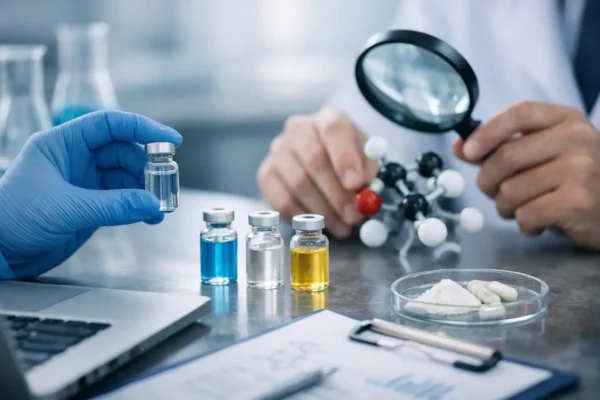
In the field of forensic toxicology and novel psychoactive substances (NPS), synthetic cathinones represent a rapidly expanding group of compounds. Among these, 3MMC (3-Methylmethcathinone) has been widely documented and studied. 3-MMC is a synthetic stimulant belonging to the cathinone class, structurally characterized as a structural isomer of the closely related compound 4-MMC (mephedrone).
First appearing on the global monitoring markets as a research chemical, 3-MMC interacts heavily with monoamine transporters in the central nervous system, making it a key subject of study in analytical chemistry and harm reduction frameworks.
Chemical and Structural Profile
From a molecular standpoint, 3MMC is an amphetamine derivative featuring a ketone group at the beta-carbon position and a methyl substitution on the aromatic ring.
| Chemical Property | Analytical Specification |
|---|---|
| IUPAC Name | 2-(methylamino)-1-(3-methylphenyl)propan-1-one |
| Molecular Formula | \(\text{C}_{11}\text{H}_{15}\text{NO}\) |
| Molecular Weight | 177.24 g/mol |
| Physical Form | Typically presents as a crystalline solid or fine white powder |
| Primary Mechanism | Monoamine reuptake inhibitor (Dopamine, Serotonin, Norepinephrine) |
Mechanism of Action and Metabolism
When introduced into an analytical model, 3MMC exhibits a clear pharmacological profile focused on the central nervous system:
- Transporter Inhibition: It blocks the reuptake of key neurotransmitters, substantially increasing extracellular concentrations of dopamine, serotonin, and norepinephrine.
- Hepatic Metabolism: In biological systems, the liver breaks down the parent compound via N-demethylation and carbonyl reduction pathways.
- Excretion: The resulting metabolites are processed by the kidneys and primarily excreted via urine, which acts as the main biological matrix for toxicology screening.
The Isomer Challenge: 3-MMC vs. 4-MMC
For forensic laboratories and customs authorities, one of the biggest challenges is differentiating 3-MMC from 4-MMC (mephedrone).
Because both compounds share the exact same molecular formula and identical molecular weight, standard field tests or simple immunoassay drug screenings cannot distinguish between them. They require advanced instrumentation to confirm which position the methyl group occupies on the benzene ring.
Advanced Laboratory Detection Methods
To definitively identify 3-MMC and isolate its presence from other synthetic cathinone structural isomers, laboratory technicians utilize high-precision analytical equipment:
- Gas Chromatography-Mass Spectrometry (GC-MS): Ionizes and fragments the molecules, creating a unique spectrum printout that maps the chemical structure.
- Liquid Chromatography-Tandem Mass Spectrometry (LC-MS/MS): Used heavily in toxicology to detect even trace amounts of 3-MMC and its metabolites in blood or urine samples with extreme accuracy.
- Nuclear Magnetic Resonance (NMR) Spectroscopy: Provides definitive mapping of the molecule’s carbon-hydrogen framework, resolving any ambiguity between isomeric compounds.