How Long Does 3 CMC Stay in Your System? Detection Windows Explained
How Long Does 3 CMC Stay in Your System How Long Does 3 CMC Stay in Your System ? If you are researching the pharmacokinetics of synthetic cathinones, understanding the clearance time of 3-Chloromethcathinone (3 CMC) is crucial. In the human body, 3 CMC typically remains detectable in urine for 1 to 3 days, in […]
Continue ReadingAre Peptides Research Chemical? The Molecular Breakdown
Are Peptides Research Chemicals? In the scientific sourcing space, it is incredibly common to see amino acid sequences and novel synthetic compounds listed side by side. This frequently leads to a foundational question for laboratory buyers: Are peptides classified as research chemicals? Are Peptides Research Chemicals? The short answer is no, they are biochemically distinct, […]
Continue ReadingResearch Chemical Storage Standards: Protecting Lab Integrity and Purity
Research Chemical Storage Standards In analytical biochemistry, structural pharmacology, and specialized testing facilities, acquiring high-purity compounds is only the first step. Once a shipment arrives from a verified provider like Finest Research Chemical, the way your laboratory handles, labels, and archives the material dictates whether your experimental data remains valid or degrades over time. Poor […]
Continue ReadingAdvanced Synthetic Cannabinoids Analytics: Ensuring Precision and Purity in Laboratory Research

Synthetic cannabinoids analytics: In the fields of structural pharmacology, forensic toxicology, and academic biochemistry, the precise identification of chemical matrices is a continuous challenge. As novel research materials evolve, laboratories frequently encounter highly complex, structurally related isomers that share near-identical molecular weights. Within this rigorous scientific landscape, relying on visual inspection or unverified documentation is […]
Continue ReadingChromatographic Fingerprinting: Establishing Advanced Cannabis Testing Standards in the Lab

Cannabis Testing Standards : A product name, a standard descriptive certificate, or an online catalog entry does not dictate how an organic matrix behaves under high-pressure analytical conditions. Achieving compliance and data reproducibility in botanical research starts with one hard fact: data integrity depends on the exact extraction methodology, the precision of the chromatographic column, […]
Continue ReadingAnalytical Testing of Steroids Raw Powder: Ensuring Batch Melting Point Accuracy
Steroids raw powder In structural biochemistry, endocrinology research, and advanced analytical pharmacology, the introduction of raw materials into a laboratory system requires uncompromising evaluation. When working with steroids raw powder, assuming product consistency based on simple visual appearance is a critical procedural failure. Because various esters and synthetic derivatives can share identical crystalline color profiles, […]
Continue ReadingSynthetic Cannabinoid Research Standards: Overcoming Analytical Laboratory Challenges

synthetic cannabinoid research standards:In the fields of structural pharmacology, forensic toxicology, and academic chemistry, tracking the evolution of novel compounds requires absolute diagnostic precision. Within the research marketplace, the synthetic cannabinoid category represents one of the fastest-evolving structural families. For laboratories utilizing high-performance liquid chromatography (HPLC) or mass spectrometry, conducting precise qualitative profiling depends heavily […]
Continue ReadingUnderstanding HGH Lyophilized Powder Integrity: Key Factors for Research
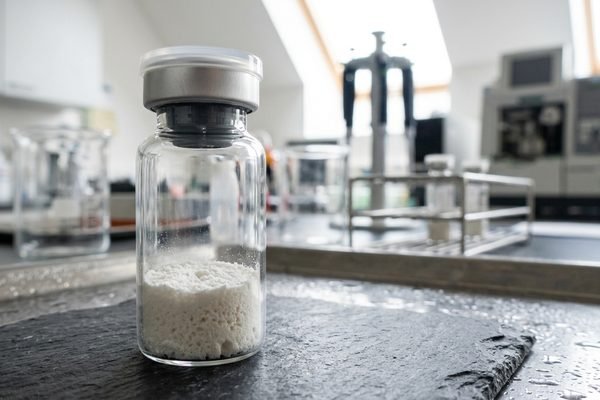
HGH lyophilized powder: When conducting laboratory assays or comparative studies involving human growth hormones (HGH), maintaining the structural stability of the compound is critical. Unlike pre-mixed liquid solutions, high-grade HGH is typically distributed as a lyophilized (freeze-dried) powder. This specialized form protects the delicate polypeptide chains from rapidly breaking down, but it requires highly specific […]
Continue ReadingResearch Peptides vs SARMs Compared for Buyers
Research peptides vs SARMs: compare mechanisms, forms, sourcing questions, and research limits before deciding which category fits your intended use.
Continue ReadingOral Steroids Versus Injectables: Key Differences

Oral steroids versus injectables differ in onset, liver burden, dosing frequency, and risks. See the trade-offs and why clinical oversight matters most.
Continue Reading